Eelgrass Restoration : a multi-faceted approach
eelgrass (Zostera marina) provides essential habitat for juvenile bay scallops—millions of which are grown every year by the MV Shellfish Group.
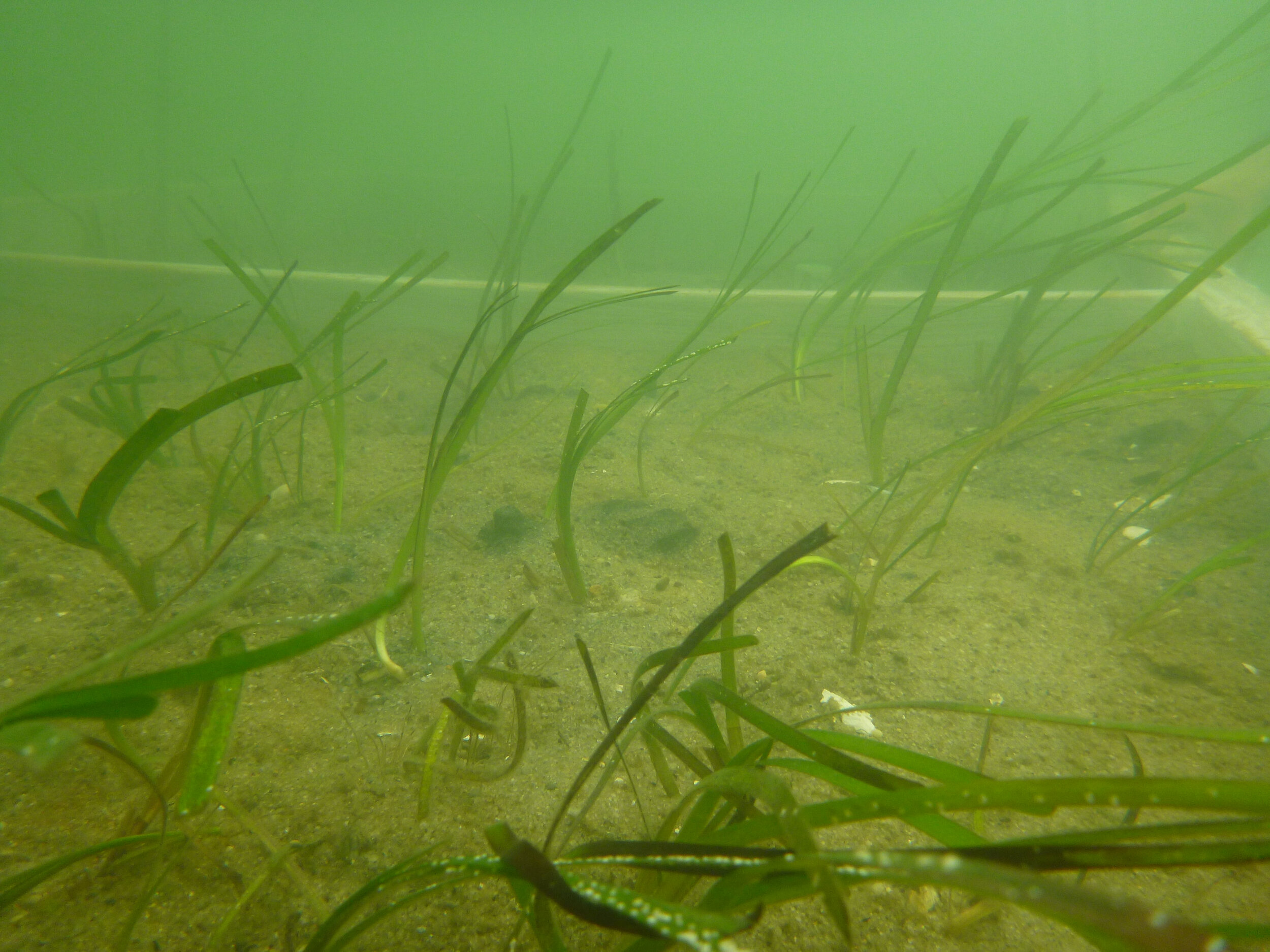
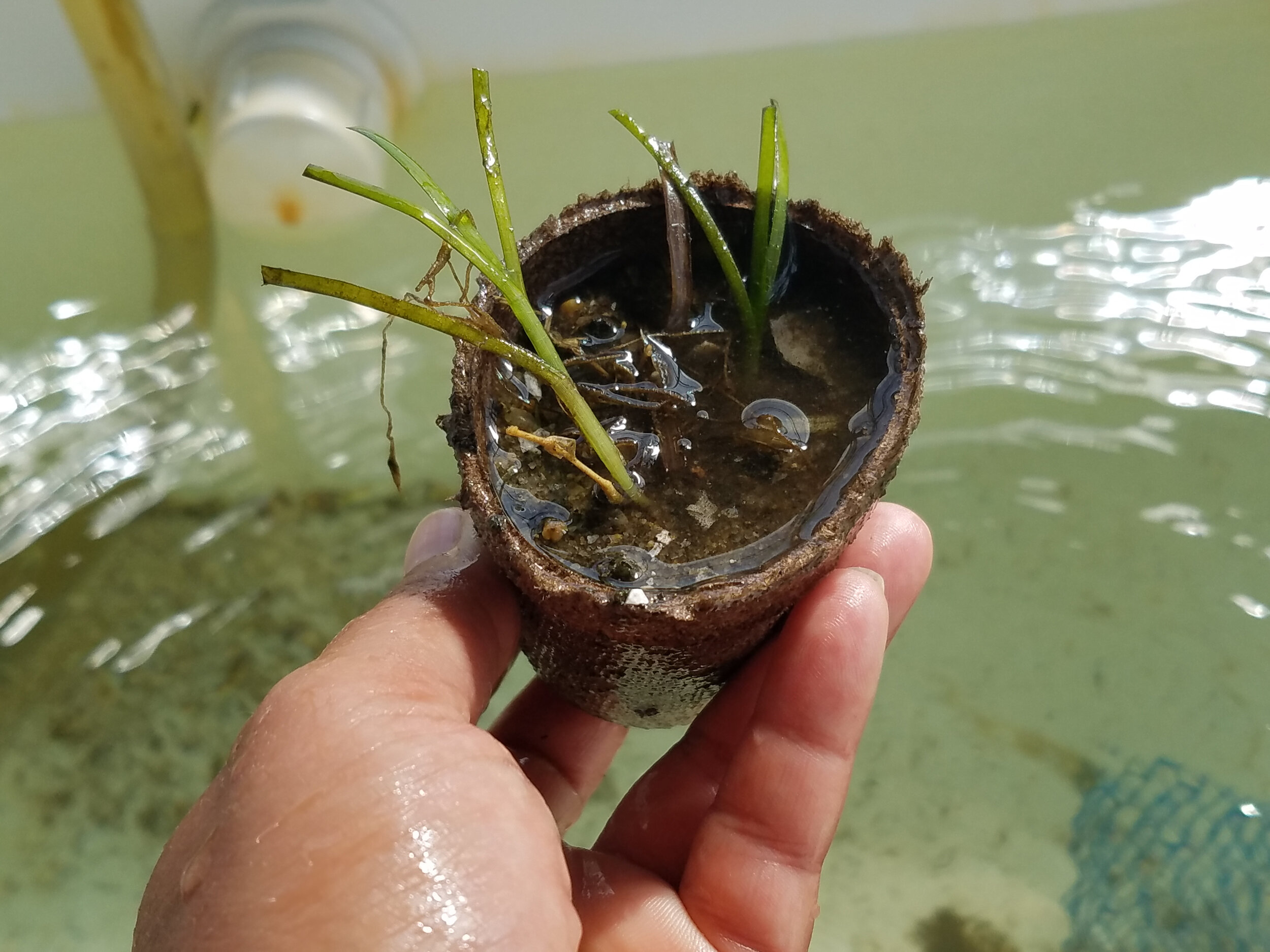
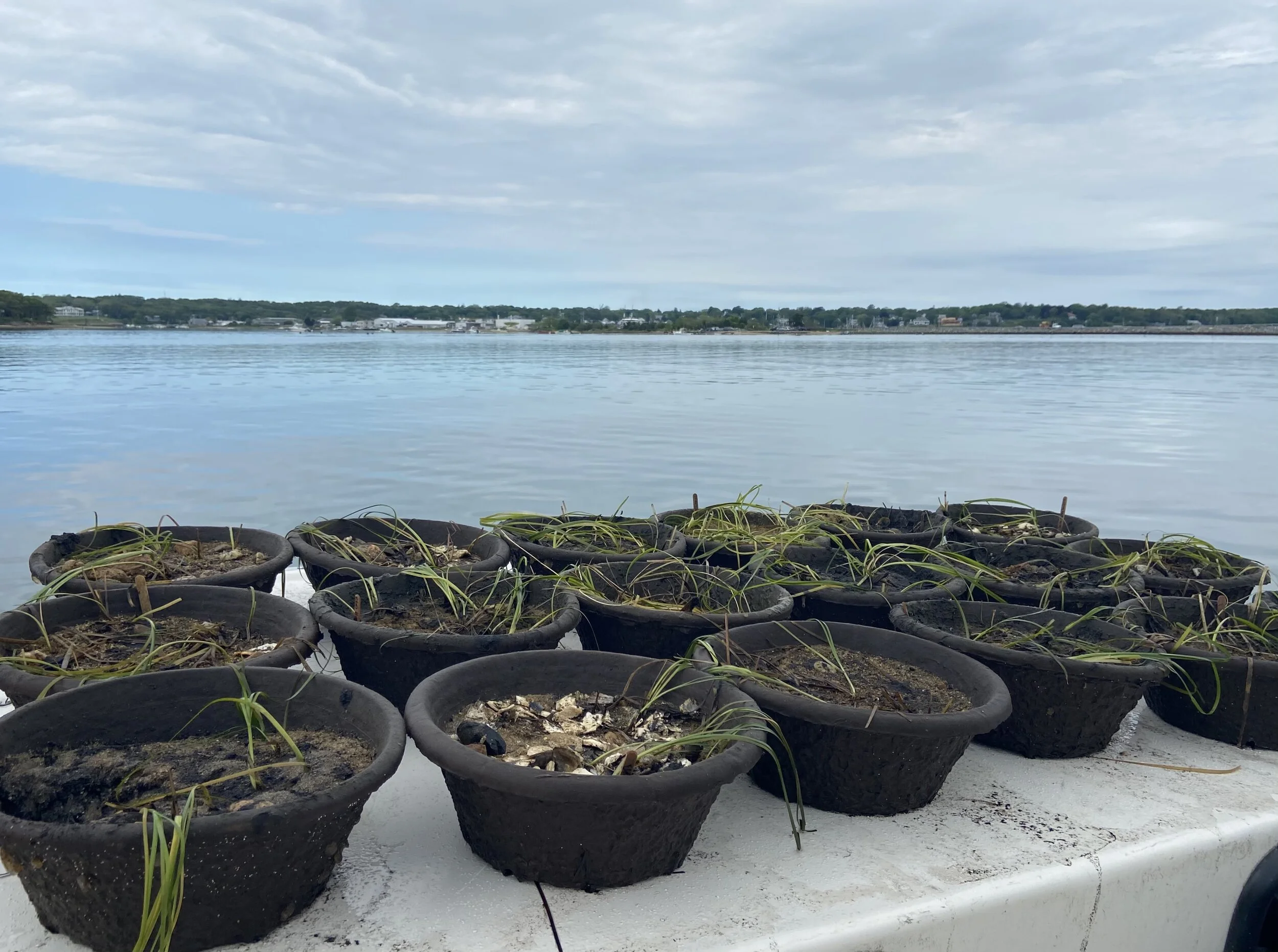
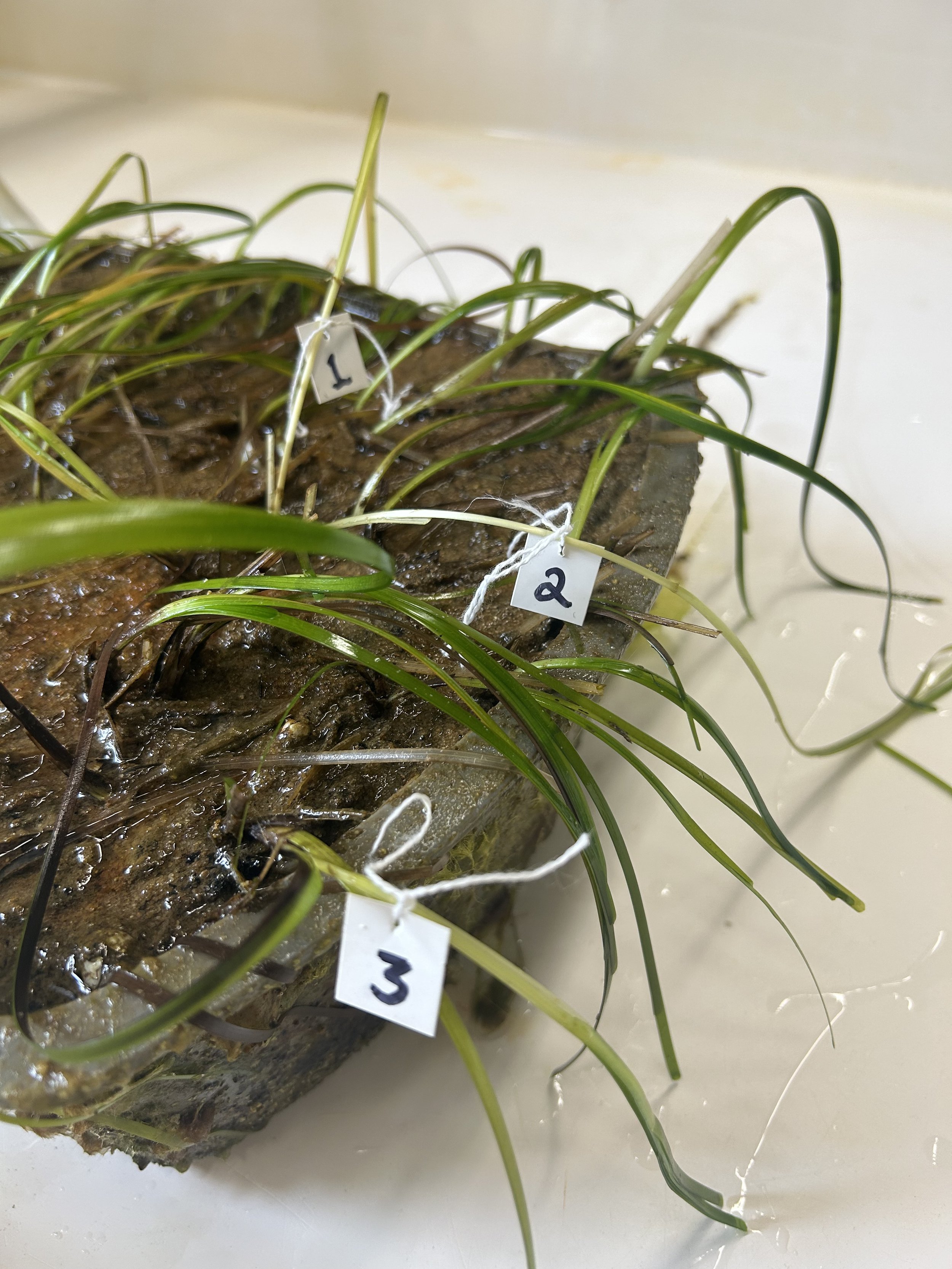
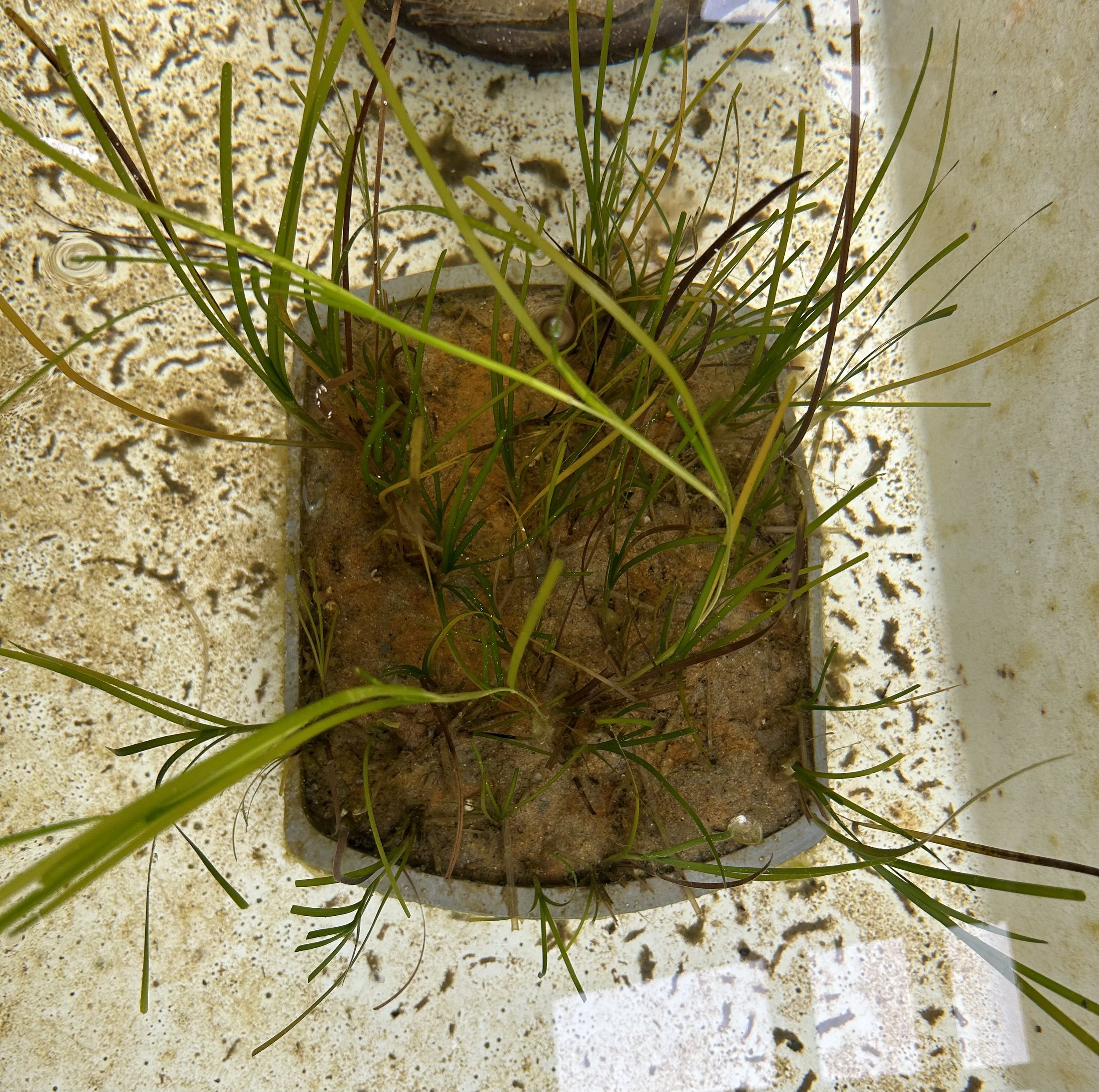
Since 2018, the MV Shellfish Group has advanced in a range of eelgrass restoration initiatives both in our hatchery and throughout Vineyard ponds. Our works includes rehabilitating uprooted shoots collected from harbors and beaches, as well as annual eelgrass seed propagation in the hatchery. We continue to refine and test replanting techniques for both shoots and seeds in Lagoon Pond, Lake Tashmoo, and Menemsha Pond.
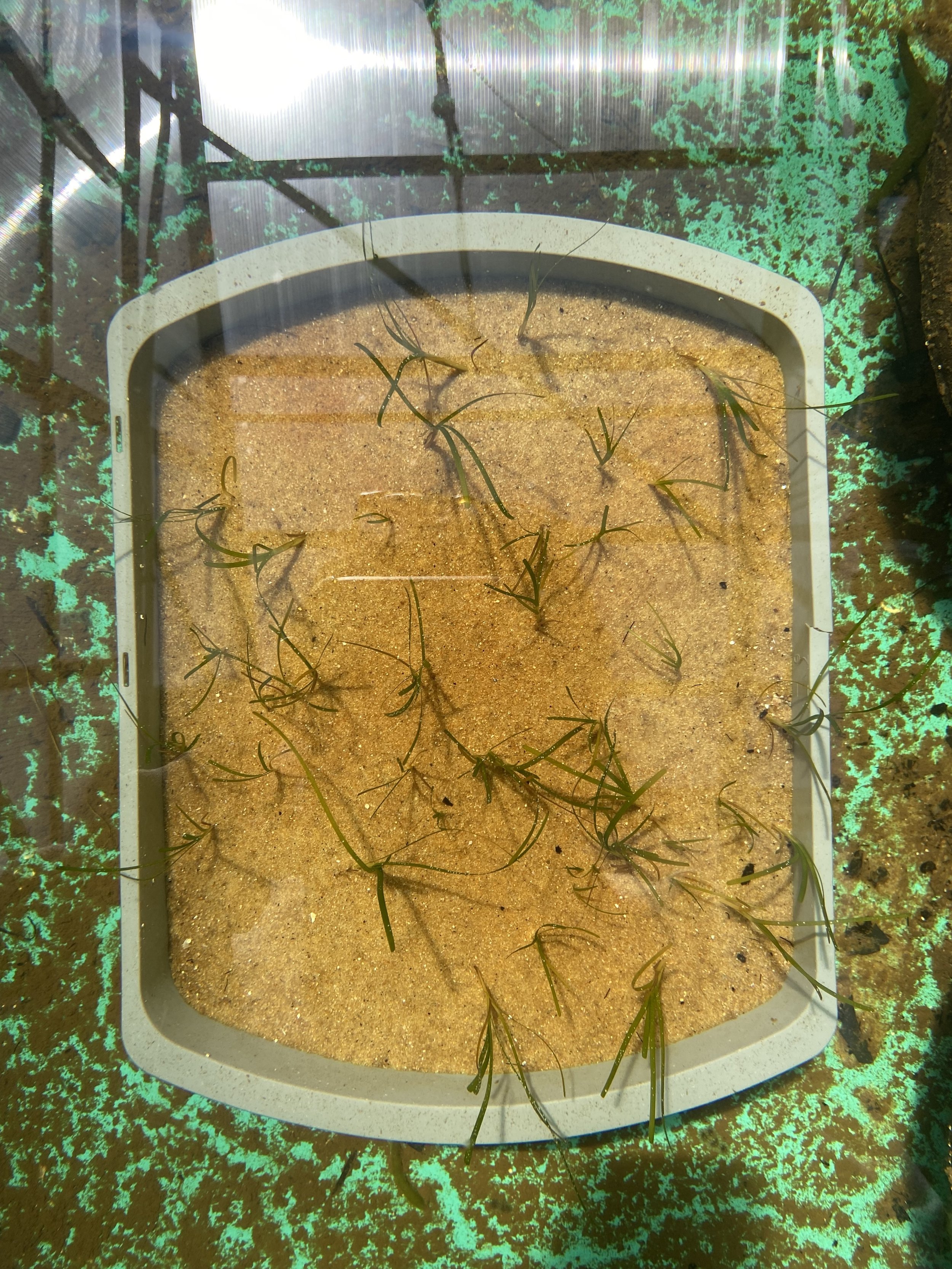
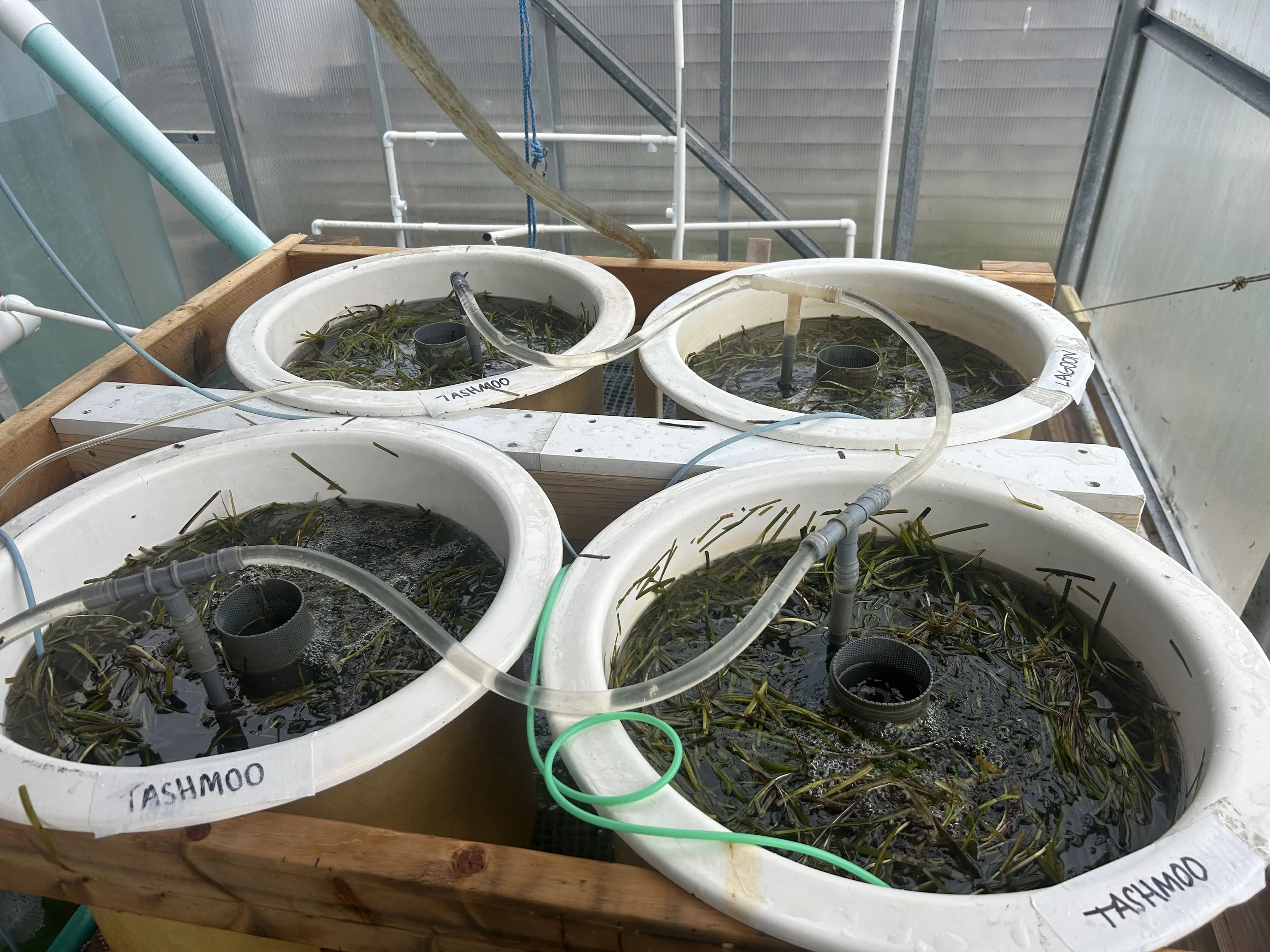
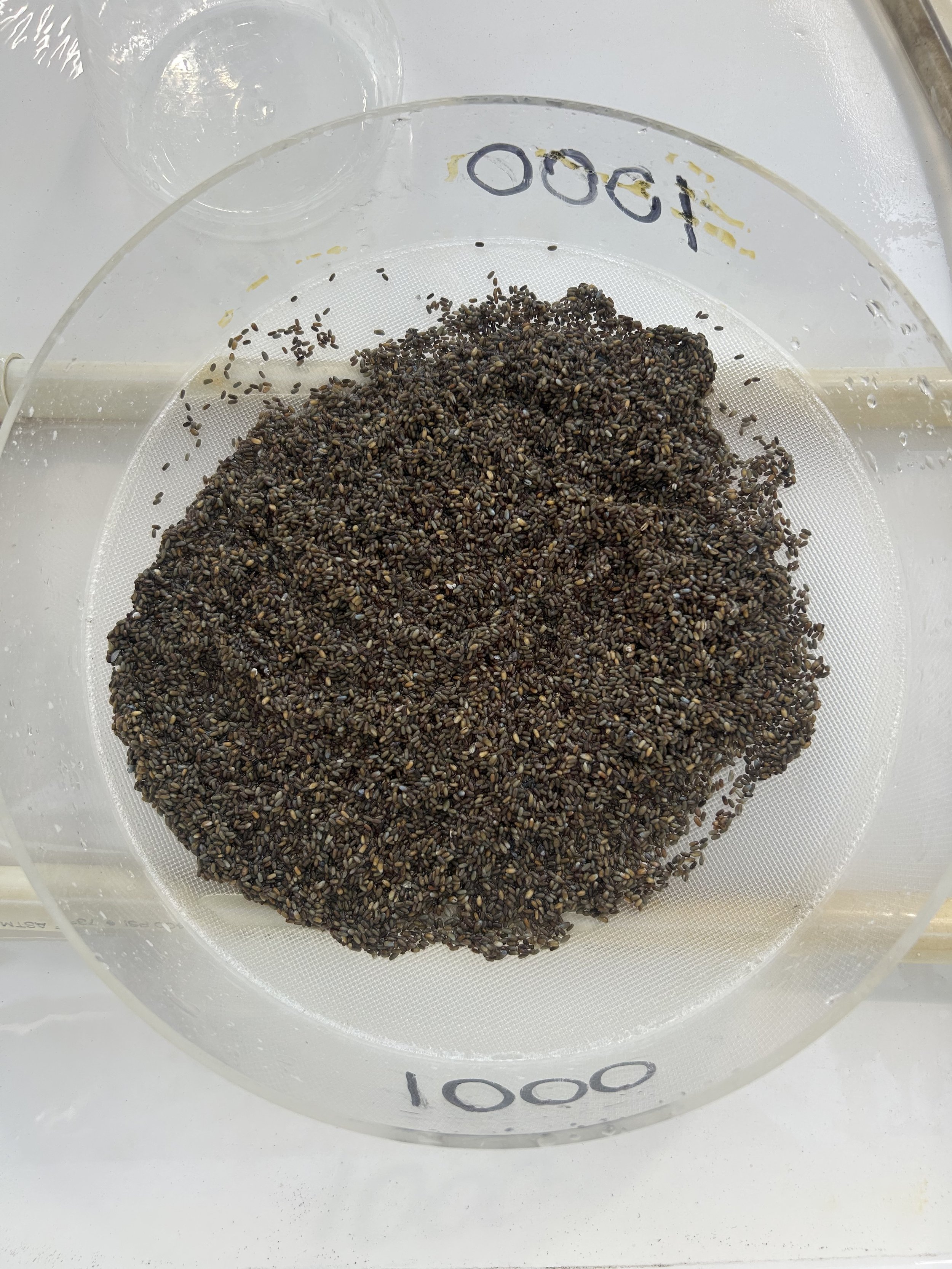
MV Shellfish Group is well equipped to process and propagate thousands of eelgrass seeds using innovative seed-holding systems at the Hughes Hatchery & Research Station in Oak Bluffs. As our program grows, we are expanding seed-based restoration efforts to complement traditional shoot-based methods, strengthening our overall impact.
In March of 2023, eelgrass grown from seed in the hatchery two years prior reached a significant milestone, producing flowering shoots with warming spring temperatures— a first for us at MVSG that we’ve been able to achieve in our nursery every spring since. This success marks meaningful progress in our seed-based restoration efforts. As we continue to improve propagation techniques and build capacity in our seagrass nursery, our goal remains clear: to protect and restore eelgrass beds in island salt ponds that support critical bay scallop habitat, and that provide a cascade of beneficial ecosystem services to its estuarine ecosystems.
Importance of Eelgrass:
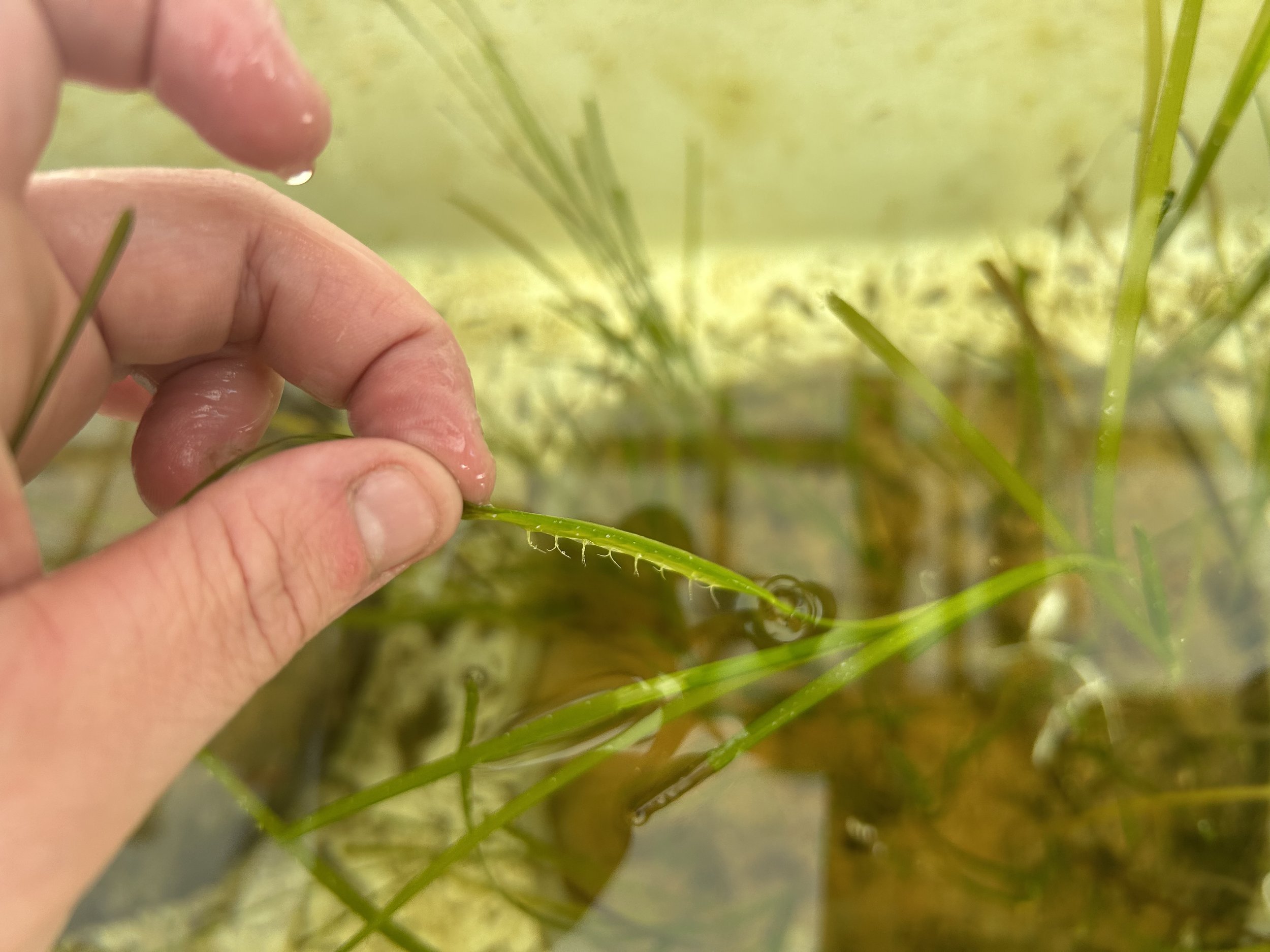
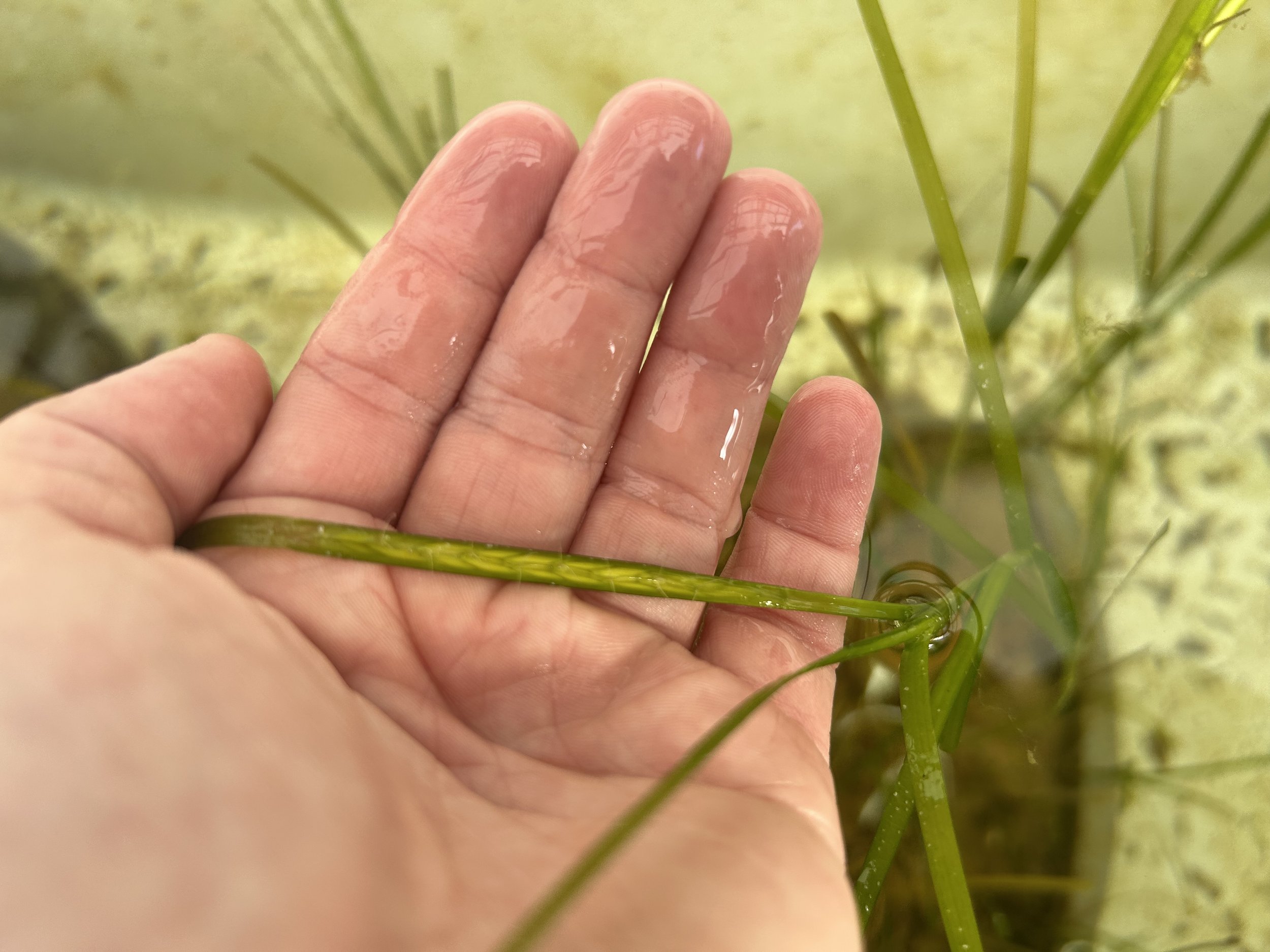
Eelgrass (Zostera marina) beds serve as essential habitat for the bivalves we invest our time in, particularly bay scallops.. Their dense leaves and spreading rhizomes stabilize sediments, reduce erosion, and create a secure environment for shellfish to thrive. Like bivalves, eelgrass also improves water quality by trapping fine particles, cycling nutrients, and storing carbon. Without healthy eelgrass meadows, our island ponds would be less resilient and less capable of supporting marine life.
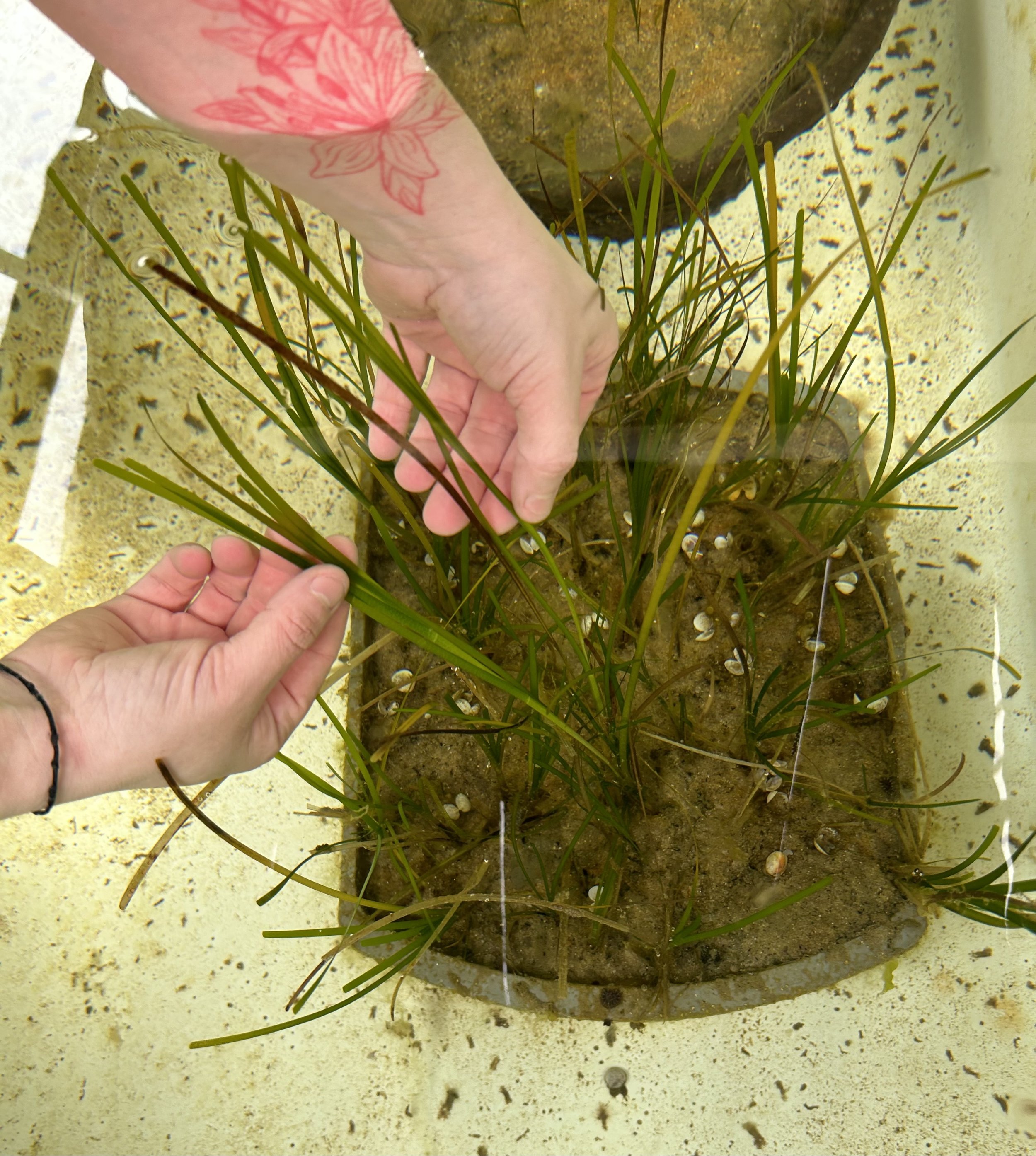
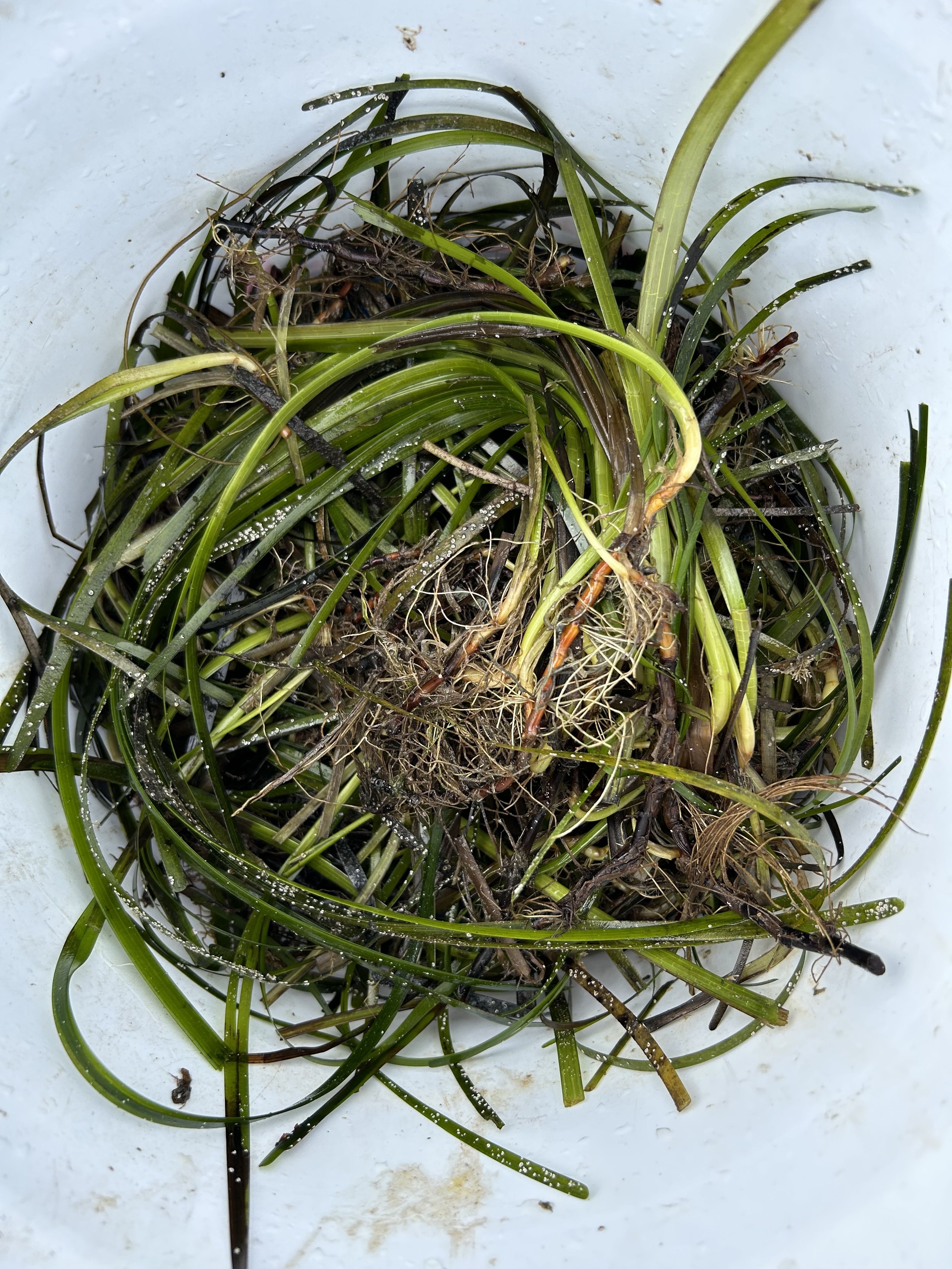
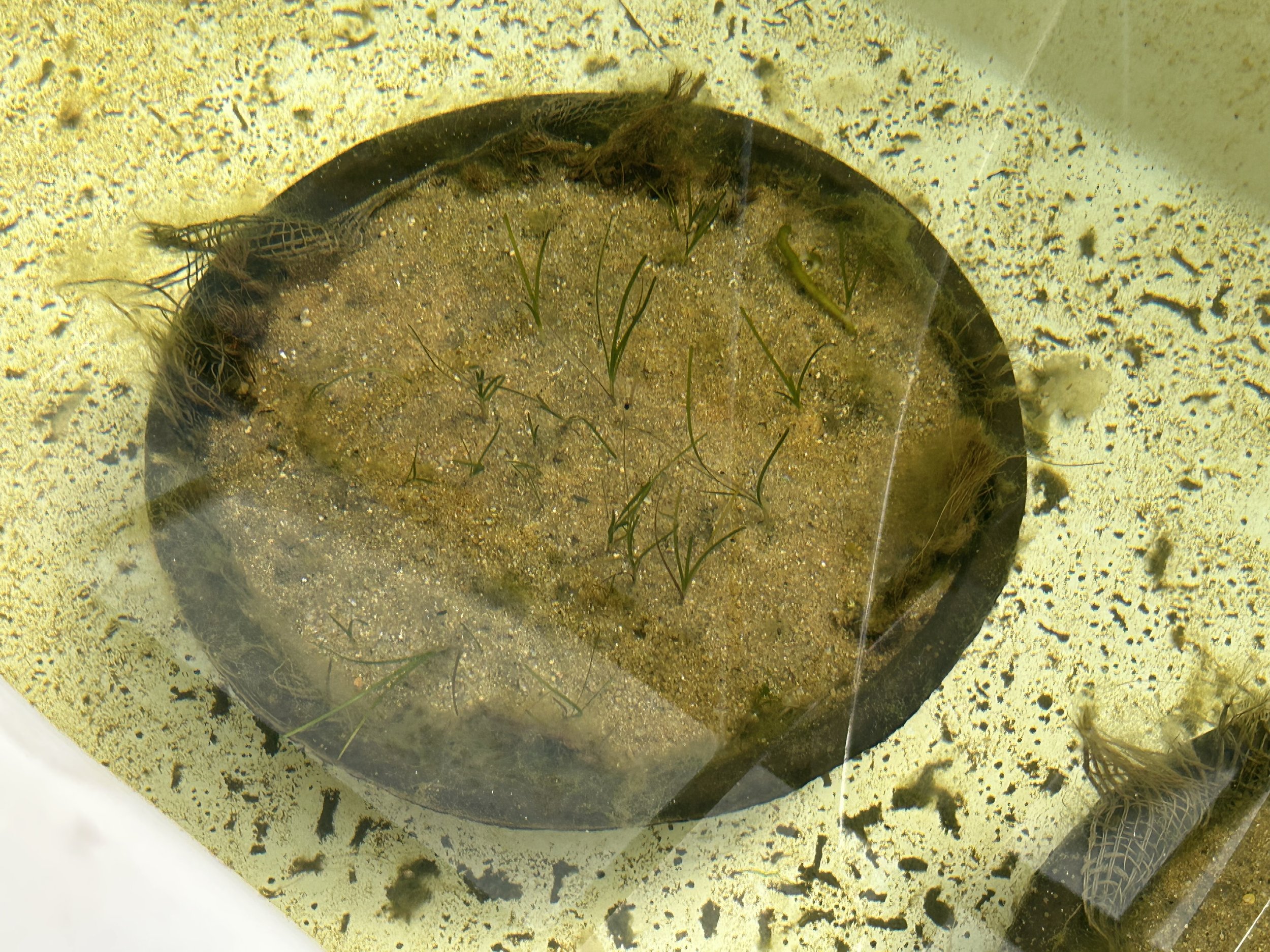
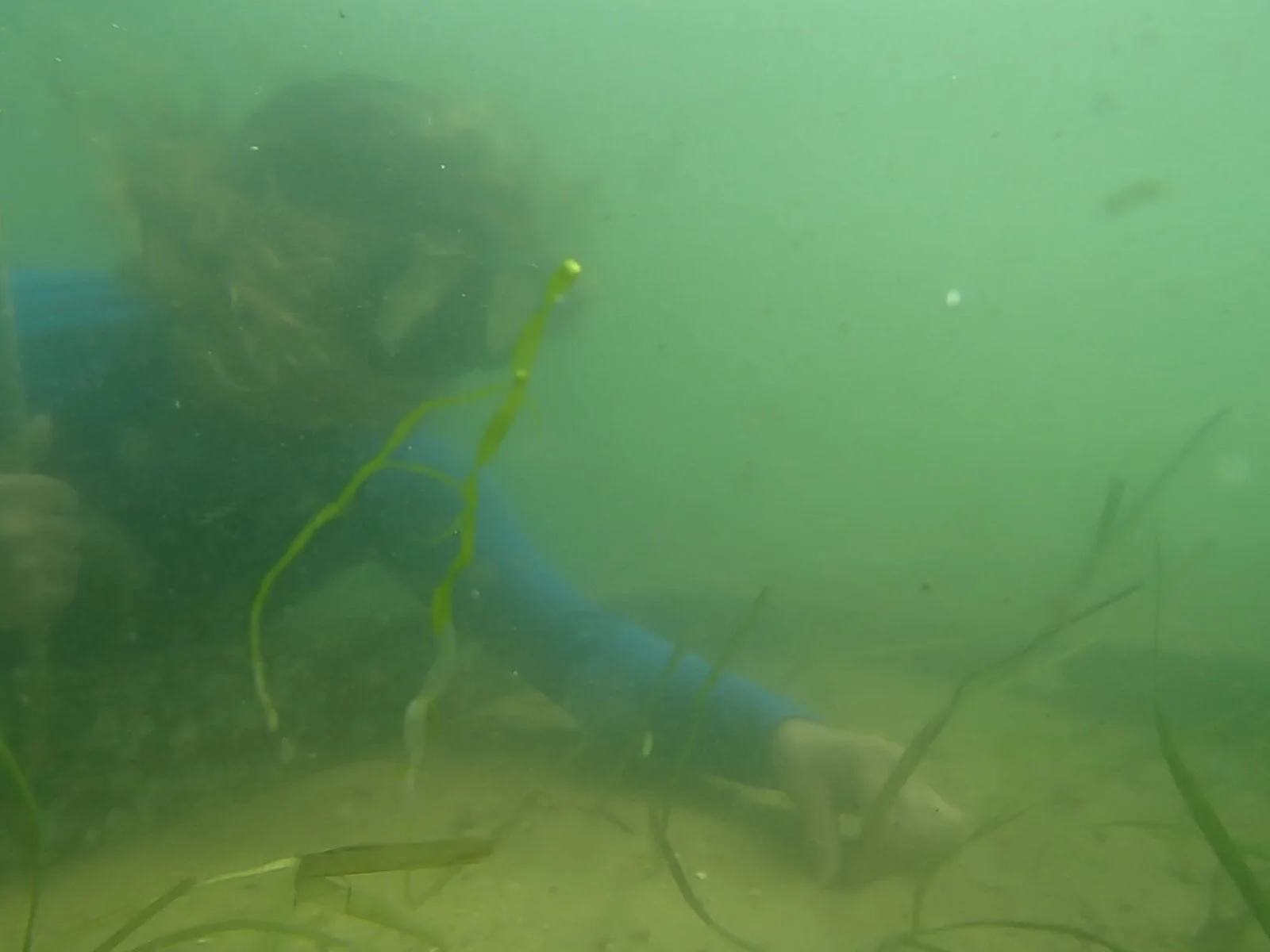
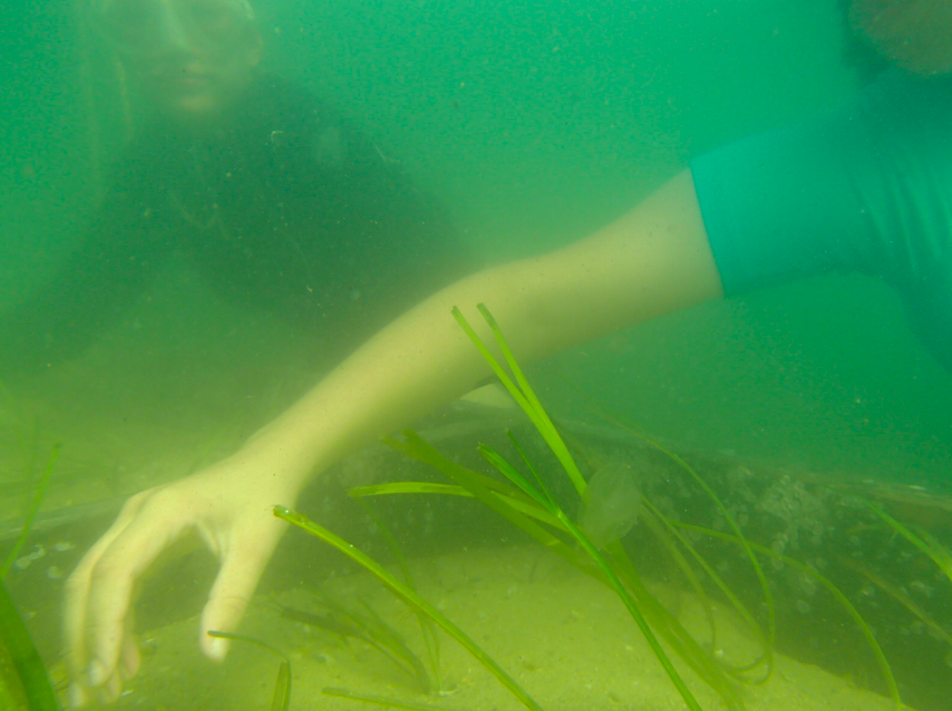
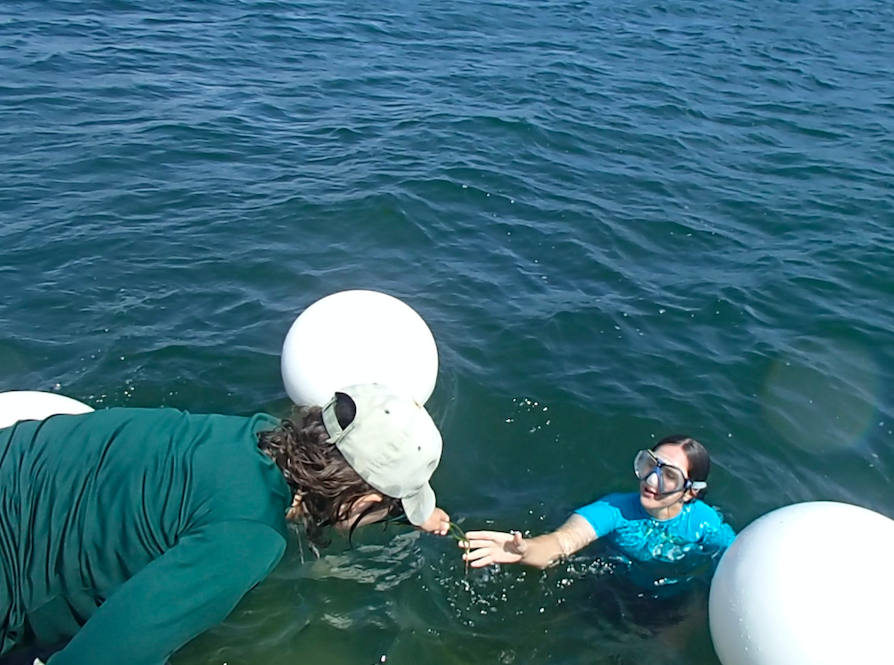
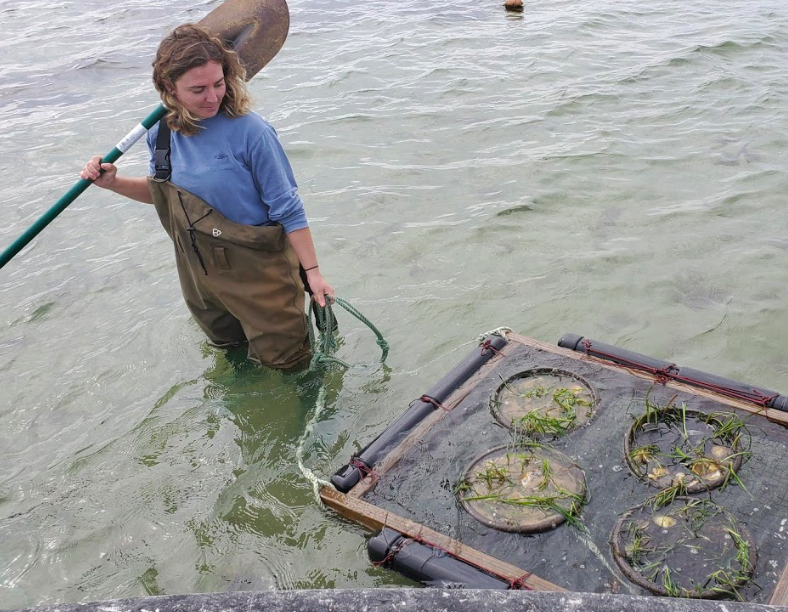
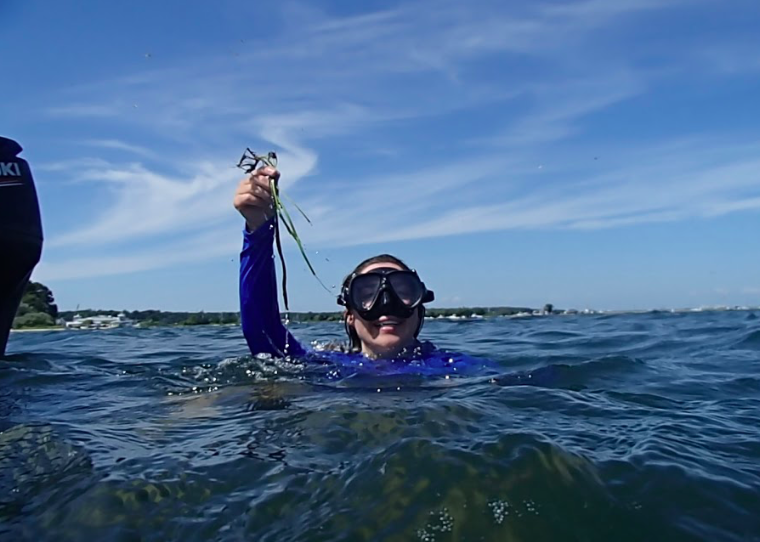
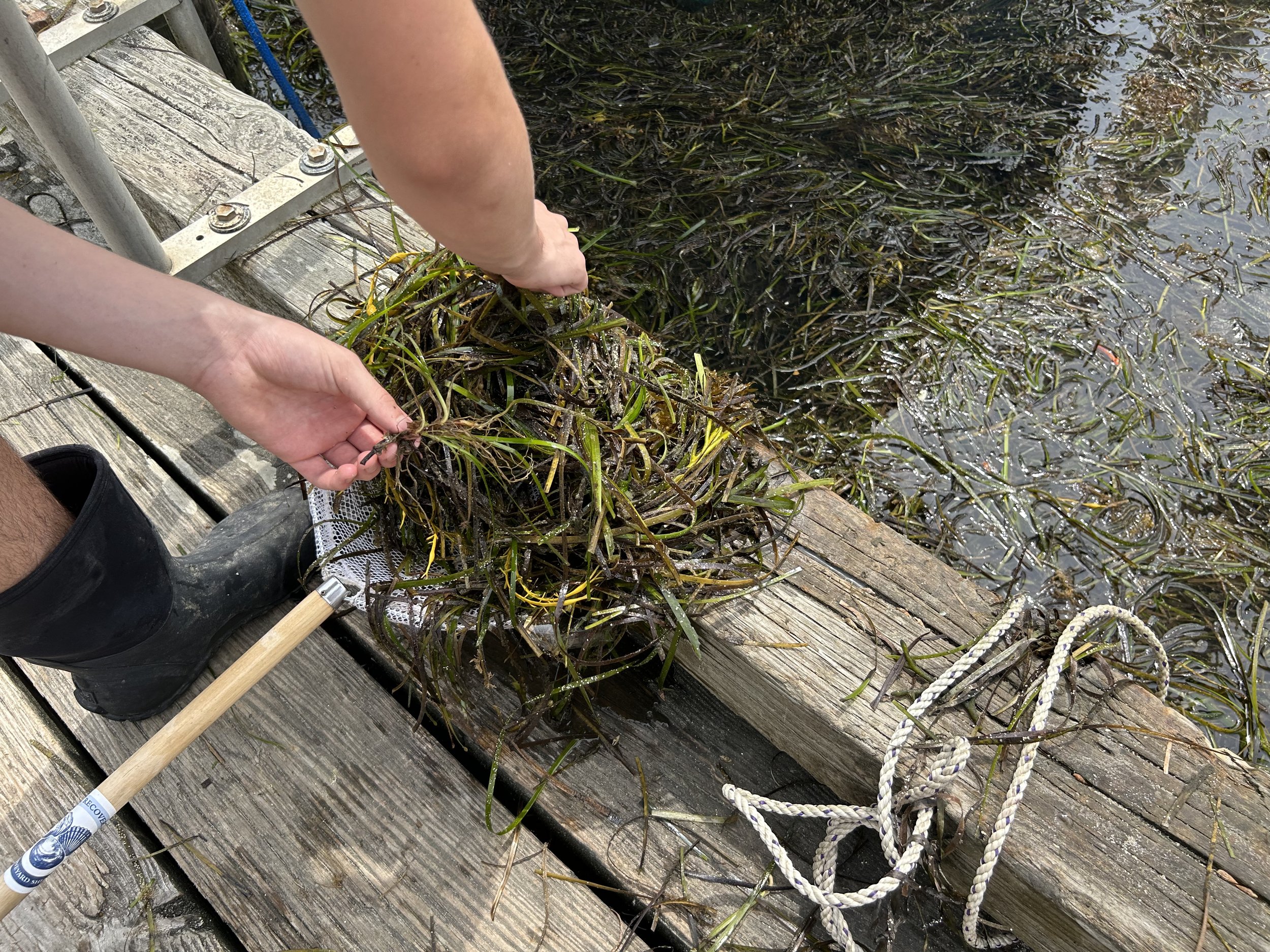
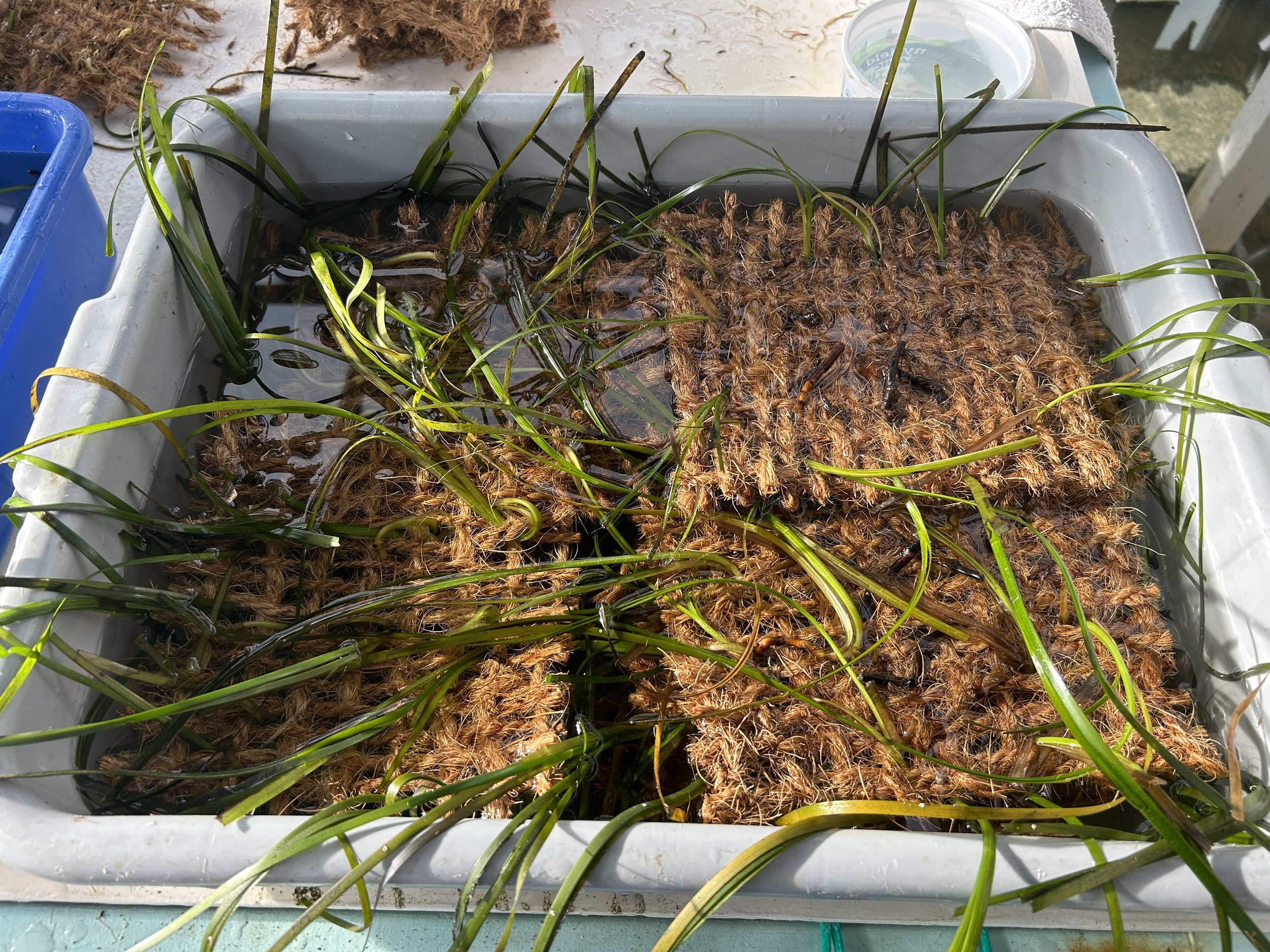
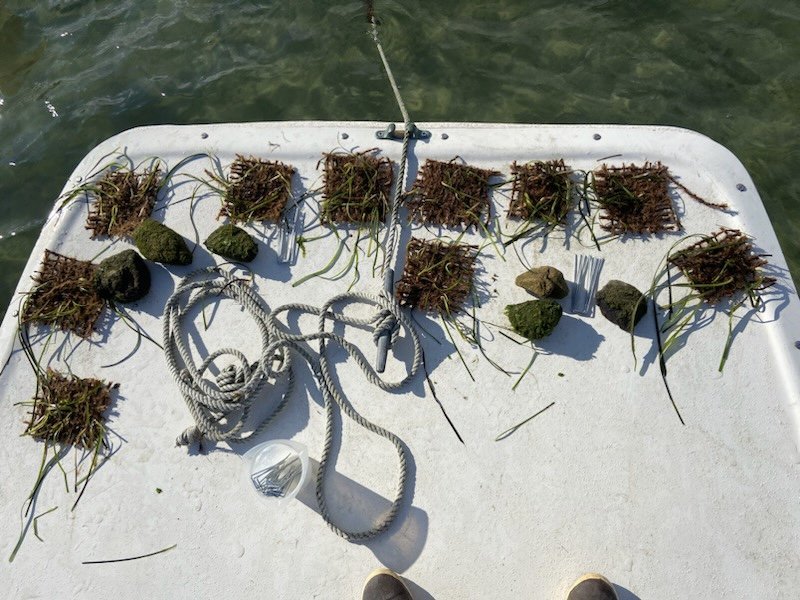
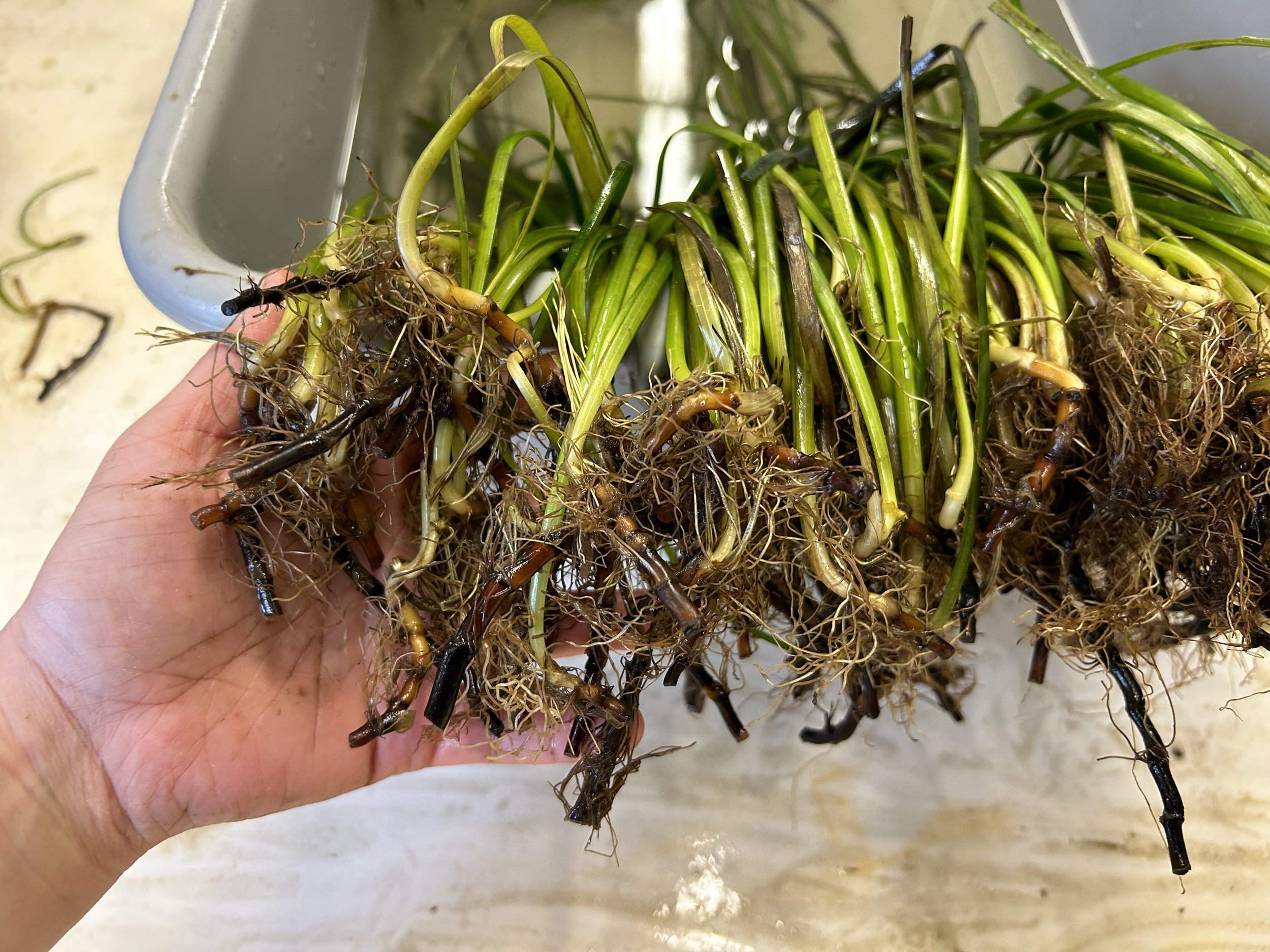
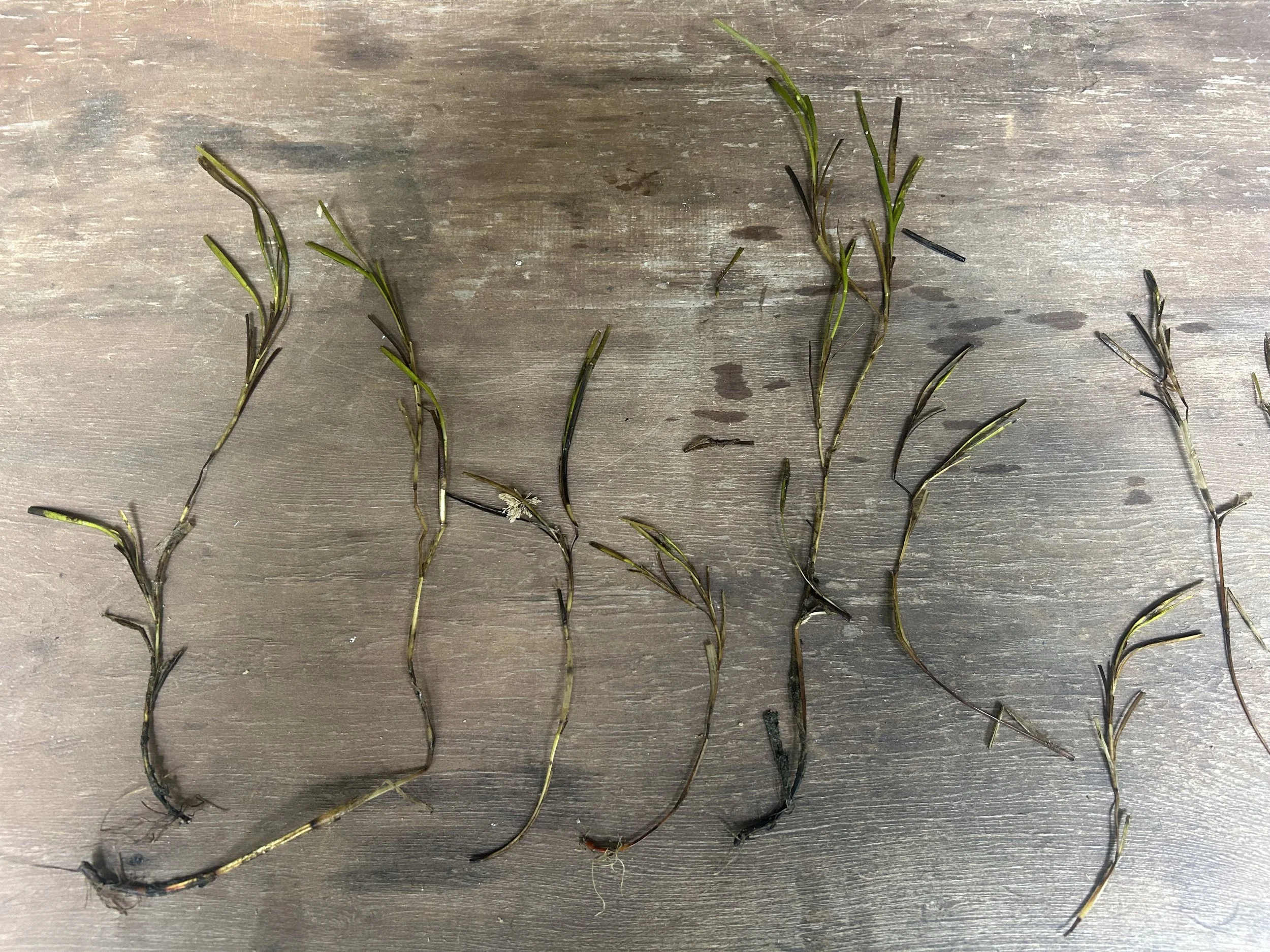
collecting eelgrass:
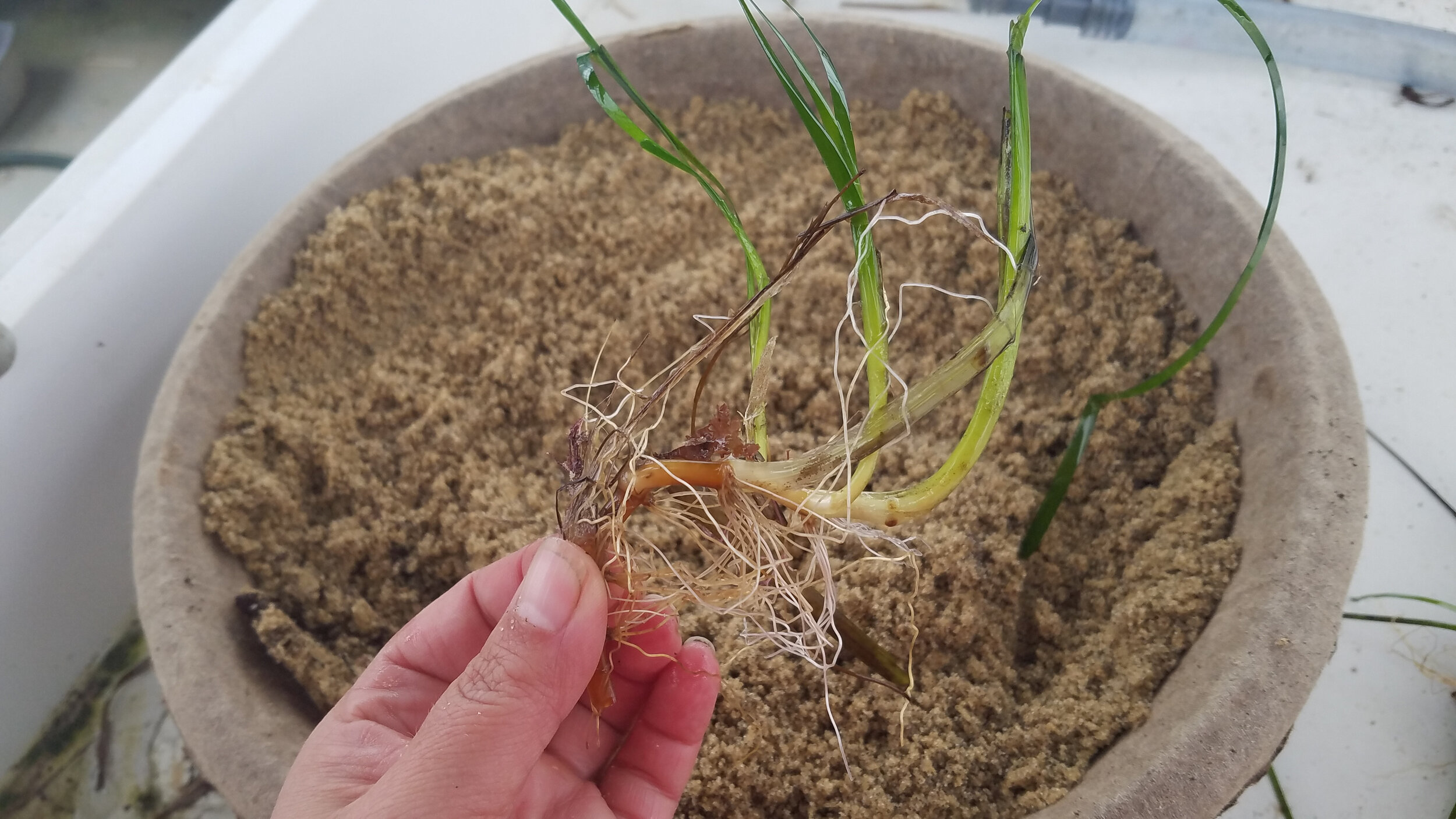
We gather adult eelgrass shoots that have already been uprooted; whether it be from boat anchors, wave action, or other natural causes. We collect them from shallow water along the shore, boat landings and harbors. Menemsha Harbor here on Martha’s Vineyard is a hotspot for full, uprooted eelgrass plants. We also collect eelgrass from Lake Tashmoo, Edgartown Great Pond, Aquinnah beaches and Lighthouse Beach in Edgartown on the island to increase genetic diversity. These plants may drift around with currents and winds but will never re-plant themselves. By collecting washed ashore eelgrass, we can repurpose this otherwise lost material by restoring the uprooted plant’s ability to provide for the ecosystem once again.
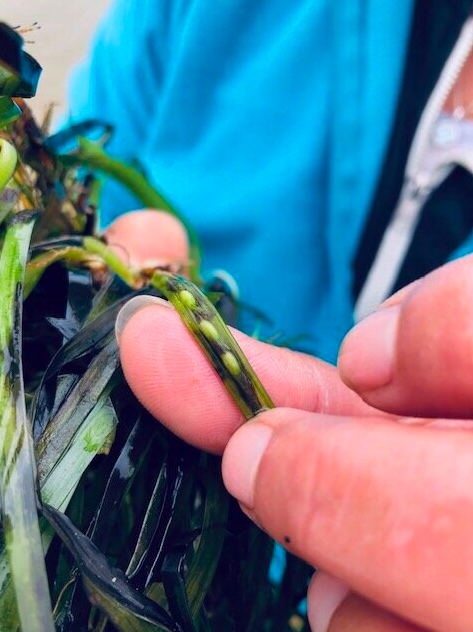
Annually during the eelgrass flowering season, a temperature-driven phenomenon that occurs at different times of the year in differing latitudes, flowering shoots containing seeds will be sustainably harvested from viable eelgrass populations around Martha’s Vineyard. Seeds are brought to full maturity in the hatchery before being returned to Vineyard salt ponds in areas in need of restoration.
restoring eelgrass:
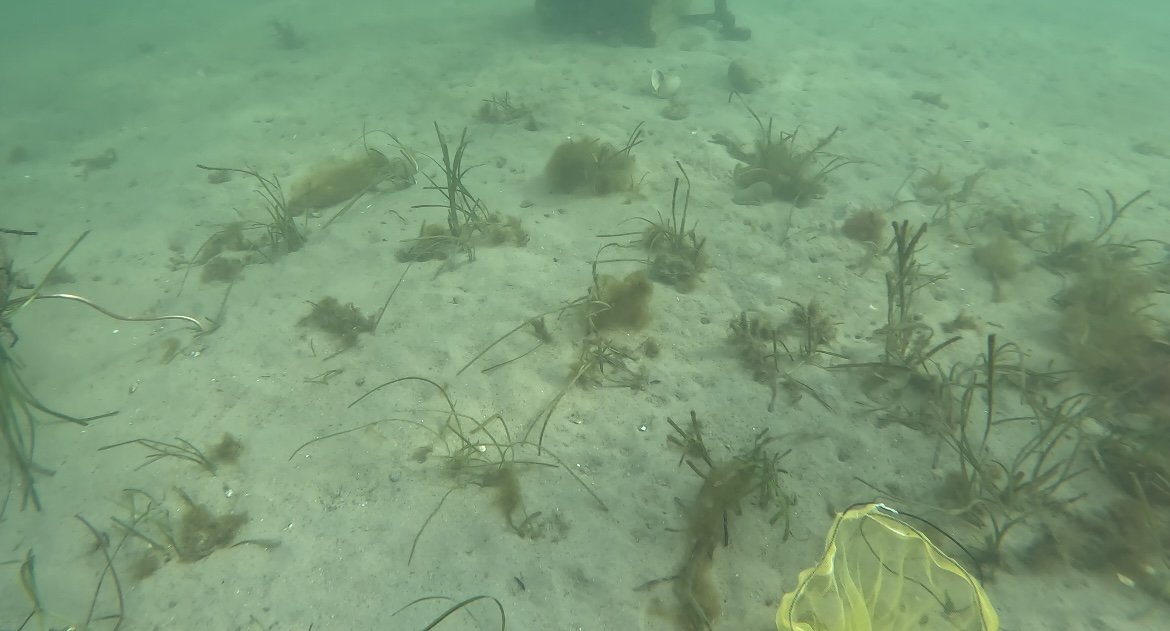
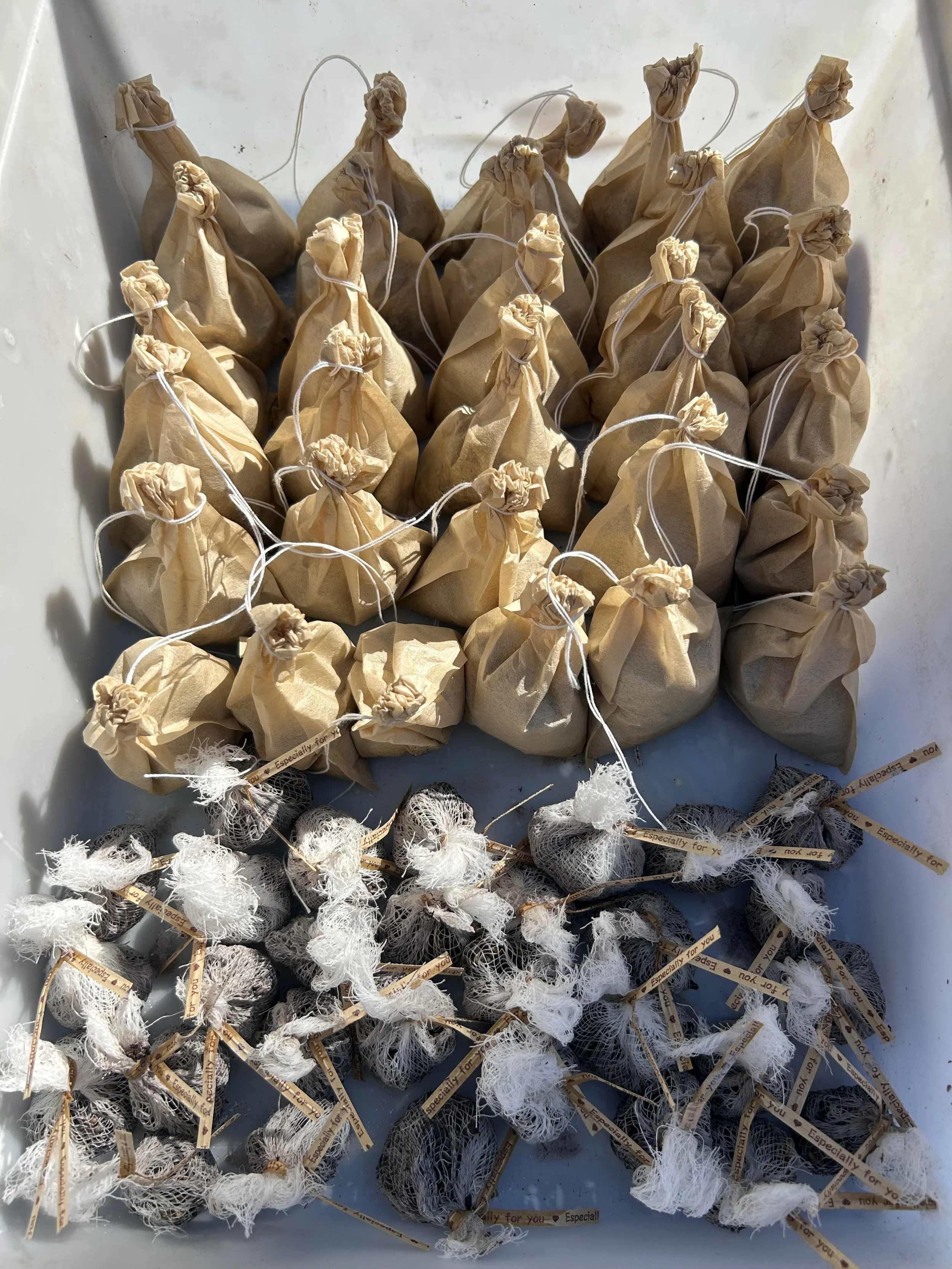
Ongoing restoration initiatives include trying various replanting methods of shoots and seeds in our two experimental restoration sites in Lagoon Pond and Lake Tashmoo. Every pond system, with their unique dynamics and characteristics, requires a different restoration method to successfully re-establish eelgrass. in 2025, MVSG focused more on seed-based restoration and was able to replant 38,000 eelgrass seeds into Lagoon Pond and Lake Tashmoo, using methods learned from colleagues in the region.